
AMLEGALSDPDPAVibe Data Privacy
Implementation

DPDPA Compliance Roadmap

Four phase implementation framework for systematic compliance achievement

24 January 2026
5 min read
Visual Guide
DPDPA Compliance Roadmap

Executive Summary

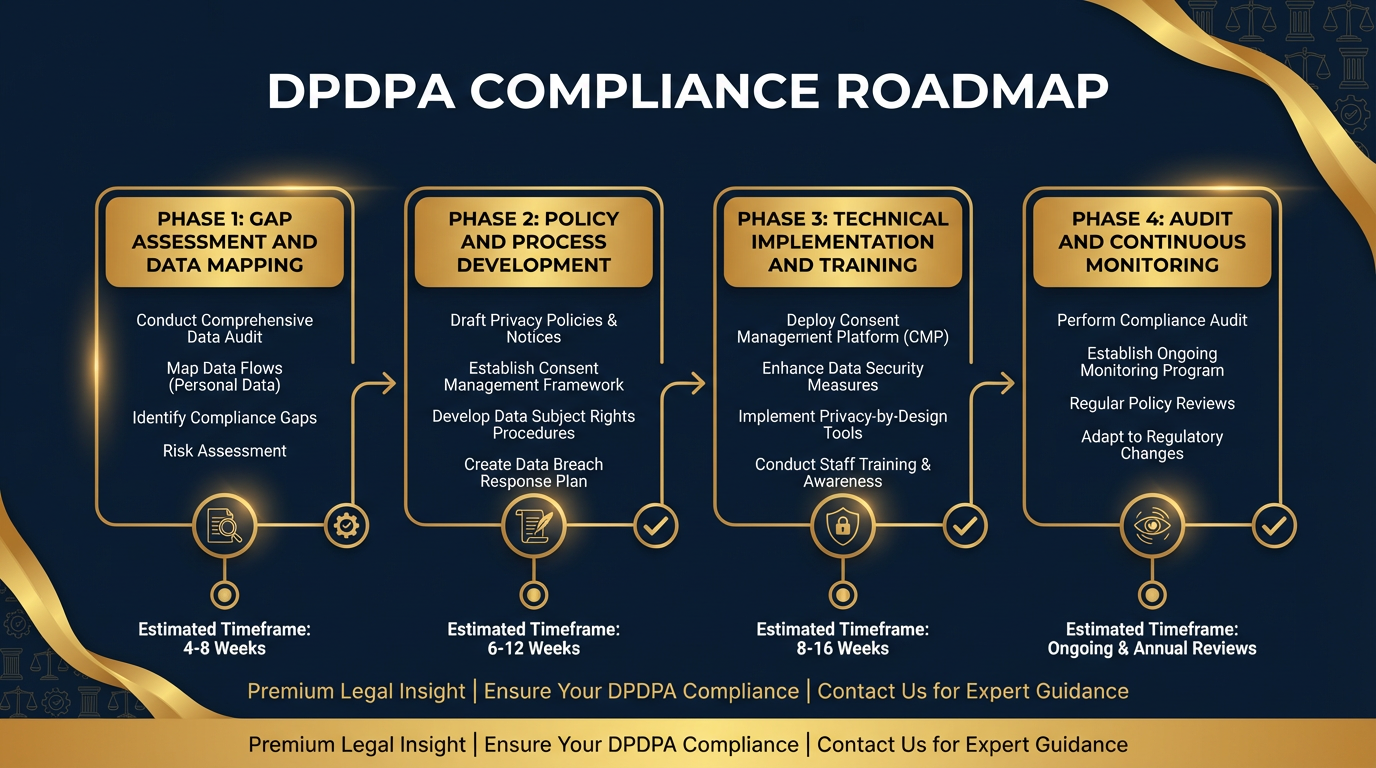
Systematic DPDPA compliance requires a phased approach: gap assessment and data mapping, policy development, technical implementation, and ongoing governance with audit verification.

DPDPA Compliance Roadmap

DPDPA Compliance Roadmap — AMLEGALS DPDPA Visual Guide Series

1

Phase One: Discovery and Assessment

Effective DPDPA compliance begins with comprehensive discovery. You cannot protect what you do not understand.

Phase one encompasses data mapping to identify all personal data processed. This includes categorisation by sensitivity and source, documentation of processing purposes and legal bases, and mapping of data flows including cross border transfers.

This foundational exercise reveals compliance gaps against DPDPA requirements and enables prioritisation of remediation efforts. Gap assessment should evaluate existing consent mechanisms against Section 6 requirements, privacy notice adequacy against Section 5 mandates, security safeguards against "reasonable security" standards, and breach response capabilities against 72 hour notification requirements. For organisations potentially subject to SDF designation, assessment should also evaluate readiness for enhanced obligations including DPO appointment and DPIA capabilities.

2

Phases Two Through Four: Implementation to Governance

Phase two translates assessment findings into policy and procedural frameworks. This means drafting privacy notices, establishing consent collection mechanisms, creating Data Principal rights response procedures, and documenting breach response protocols. These instruments must satisfy both legal requirements and operational usability. Policies that exist only on paper provide neither compliance assurance nor operational value.

Phase three focuses on technical implementation. This includes deploying consent management platforms, implementing access controls and encryption, establishing breach detection and response capabilities, and creating audit trail infrastructure. Technology choices should prioritise interoperability with potential Consent Manager infrastructure and scalability for evolving requirements.

Phase four establishes governance structures for ongoing compliance. This means designating accountability, implementing training programmes, establishing monitoring mechanisms, and scheduling periodic assessments. Compliance is not a destination but a continuous journey requiring sustained attention and resource commitment.

Key Takeaways

  • 1Phase 1: Data mapping and gap assessment against DPDPA requirements
  • 2Phase 2: Policy development including privacy notices and consent mechanisms
  • 3Phase 3: Technical implementation of security and consent infrastructure
  • 4Phase 4: Governance structures with ongoing monitoring and audit
  • 5Compliance is continuous, not a one time achievement