
Insights
Authoritative analysis on data privacy compliance under DPDPA 2023. Eighteen essential topics covering consent management, breach response, cross border transfers, penalties, DPO requirements, and emerging regulatory developments.
 Consent & Rights
Consent Management Under DPDPA
Building Compliant Consent Architecture for Digital Platforms
"Consent shall be free, specific, informed, unconditional and unambiguous with a clear affirmative action."
— DPDPA Section 6
 Breach Response
Data Breach Notification Under DPDPA
Navigating the 72-Hour Reporting Window and CERT-In Harmonisation
"Any service provider shall mandatorily report cyber incidents to CERT-In within 6 hours."
— CERT-In Directions 2022
 Compliance
Significant Data Fiduciary Obligations
Enhanced Compliance Requirements for High-Volume Data Processors
"The Central Government may notify any Data Fiduciary as a Significant Data Fiduciary based on volume and sensitivity of personal data processed."
— DPDPA Section 10(1)
 International
Cross-Border Data Transfers Under DPDPA
Navigating the Negative List Framework and Sectoral Localisation
"The Central Government may restrict transfer of personal data to such country or territory outside India as may be notified."
— DPDPA Section 17
 Children's Data
Processing Children's Data Under DPDPA
Verifiable Parental Consent and Prohibited Processing Activities
"The Data Fiduciary shall, before processing any personal data of a child, obtain verifiable consent of the parent of such child."
— DPDPA Section 9(1)
 Consent & Rights
Dark Patterns and DPDPA Compliance
How Deceptive Design Practices Violate Data Protection Principles
"Consent must be free, informed, specific, and unambiguous—dark patterns directly contradict these requirements."
— DPDPA Compliance Principle
 Consent & Rights
Data Principal Rights Under DPDPA
Access, Correction, Erasure, and Grievance Redressal Obligations
"The Data Principal shall have the right to obtain from the Data Fiduciary confirmation whether personal data is being processed."
— DPDPA Section 11(1)
 Compliance
Data Fiduciary Obligations Under DPDPA
Understanding Primary Responsibility for Lawful Processing
"A Data Fiduciary is any person who alone or in conjunction with other persons determines the purpose and means of processing of personal data."
— DPDPA Section 2(i)
 Compliance
DPDPA Implementation Timeline
Navigating the 12-18 Month Compliance Runway
"The 18-month milestone represents a cliff edge—significant effort will be required for sanitizing legacy data."
— Implementation Advisory
 Contracts
DSA vs NDA vs MOU: Data Privacy Implications
Choosing the Right Agreement for Personal Data Sharing
"When personal data is shared, a Data Sharing Agreement is mandatory under DPDPA—NDAs and MOUs are insufficient."
— Contractual Compliance Principle
 Penalties
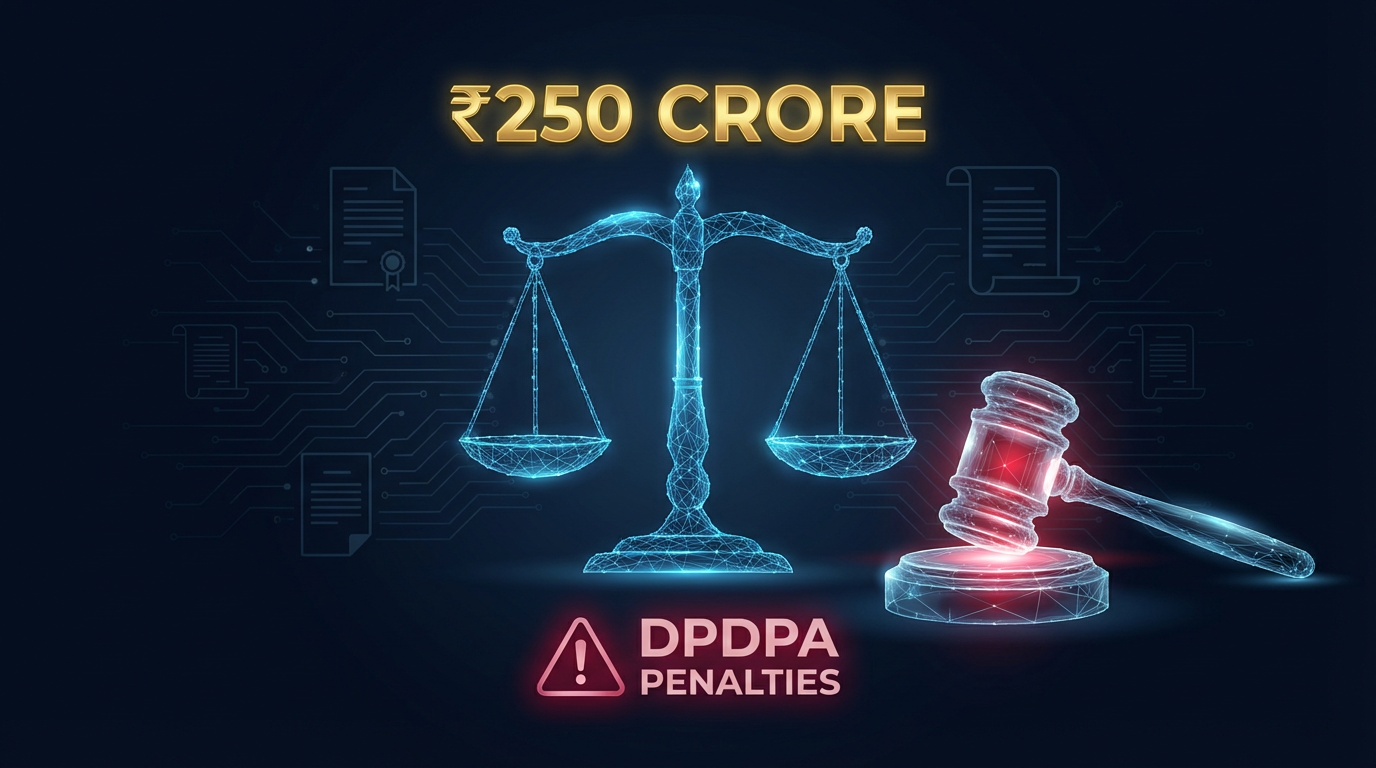
DPDPA Penalties and Fines Structure
Understanding the ₹250 Crore Maximum Penalty Framework
"The Data Protection Board may, after giving reasonable opportunity of being heard, impose a monetary penalty not exceeding ₹250 crores."
— DPDPA Section 33
ComplianceData Protection Officer Appointment Under DPDPA
When and How to Appoint a Resident DPO in India
"A Significant Data Fiduciary shall appoint a Data Protection Officer who shall be based in India."
— DPDPA Section 10(2)(a)
 International
DPDPA vs GDPR: Key Differences and Similarities
Comparative Analysis for Multinational Compliance
"While DPDPA draws inspiration from GDPR, significant structural differences demand distinct compliance approaches."
— Comparative Analysis
 International
Data Localisation Requirements in India
Navigating DPDPA and Sectoral Localisation Mandates
"Data localisation in India operates through sector-specific regulations rather than DPDPA general mandate."
— Regulatory Framework
Consent & RightsConsent Manager Framework Under DPDPA
Registration, Obligations, and Integration Requirements
"A Consent Manager shall be registered with the Board and shall act on behalf of a Data Principal."
— DPDPA Section 2(g)
ComplianceData Protection Impact Assessment Under DPDPA
When and How to Conduct DPIAs for High-Risk Processing
"A Significant Data Fiduciary shall undertake Data Protection Impact Assessment."
— DPDPA Section 10(2)(c)
ComplianceDPDPA Exemptions and Legitimate Uses
When Consent is Not Required for Lawful Processing
"Personal data may be processed without consent for specified legitimate uses."
— DPDPA Section 7
 Definitions
Personal Data Definition Under DPDPA
Understanding What Constitutes Digital Personal Data
"Personal data means any data about an individual who is identifiable by or in relation to such data."
— DPDPA Section 2(t)
 Infrastructure
Data Centre Operations Under DPDPA
Navigating Processor Obligations, Localisation Requirements and Technical Compliance Standards
"The Data Processor shall process personal data only in accordance with the instructions of the Data Fiduciary and shall not process such personal data for any purpose other than the purpose for which it was provided."
— DPDPA Section 8(2)
 Compliance
Grievance Redressal Under DPDPA
Building Effective Internal Complaint Mechanisms Before the Data Protection Board Gets Involved
"Every Data Fiduciary shall publish the business contact information of a Data Protection Officer or such other person who is able to answer on behalf of the Data Fiduciary, the questions, if any, raised by the Data Principal about the processing of her personal data."
— DPDPA Section 13(1)
 Enterprise
Vendor and Processor Governance Under DPDPA
Contractual Controls, Statutory Boundaries and Operational Accountability for Third-Party Data Processing
"The Data Processor shall process personal data only in accordance with the instructions of the Data Fiduciary and shall not process such personal data for any purpose other than the purpose for which it was provided."
— DPDPA Section 8(2)
 Regulatory
Legitimate Uses Without Consent Under DPDPA
Navigating Section 7 Grounds, Operational Boundaries and the Limits of Non-Consensual Processing
"A Data Fiduciary may process the personal data of a Data Principal for certain legitimate uses including the performance of any function under any law, compliance with any order or judgment, or for responding to a medical emergency."
— DPDPA Section 7
 Strategy
Board-Level Privacy Governance Under DPDPA
Penalty Exposure, Governance Structures and Strategic Oversight for Data Protection Compliance
"The penalty for failure to take reasonable security safeguards to prevent personal data breach shall be up to two hundred and fifty crore rupees."
— DPDPA Schedule, Item 1
 Compliance
Data Retention and Erasure Under DPDPA
Navigating Retention Limitations, Erasure Obligations and the Intersection with Sectoral Retention Laws
"The Data Fiduciary shall, unless retention is necessary for compliance with any law for the time being in force, erase personal data upon the Data Principal ceasing to be a customer or withdrawing consent."
— DPDPA Section 8(7)
 International
What DPDP Rules G.S.R. 846(E) Mean for Your India Operations
A Section-by-Section Operational Map of the DPDP Rules, 2025 for Foreign Businesses Operating in India
"The Central Government hereby makes the following rules, namely:— 1. Short title and commencement.— (1) These rules may be called the Digital Personal Data Protection Rules, 2025."
— G.S.R. 846(E), Gazette of India, 13 November 2025
 International
DPDPA Compliance Roadmap for Foreign Companies Entering India
A 12-Phase Operational Framework from Entity Assessment to Enforcement Readiness
"This Act applies to the processing of digital personal data within the territory of India where the personal data is collected in digital form or in non-digital form and digitised subsequently."
— DPDPA Section 3(a)
 Contracts
Section 8(2) Data Processor Agreements: What Foreign Entities Must Mandate
Building DPDPA-Compliant Processor Contracts That Survive Board Scrutiny
"A Data Fiduciary shall engage, appoint or use a Data Processor to process personal data on its behalf only under a valid contract."
— DPDPA Section 8(2)
 International
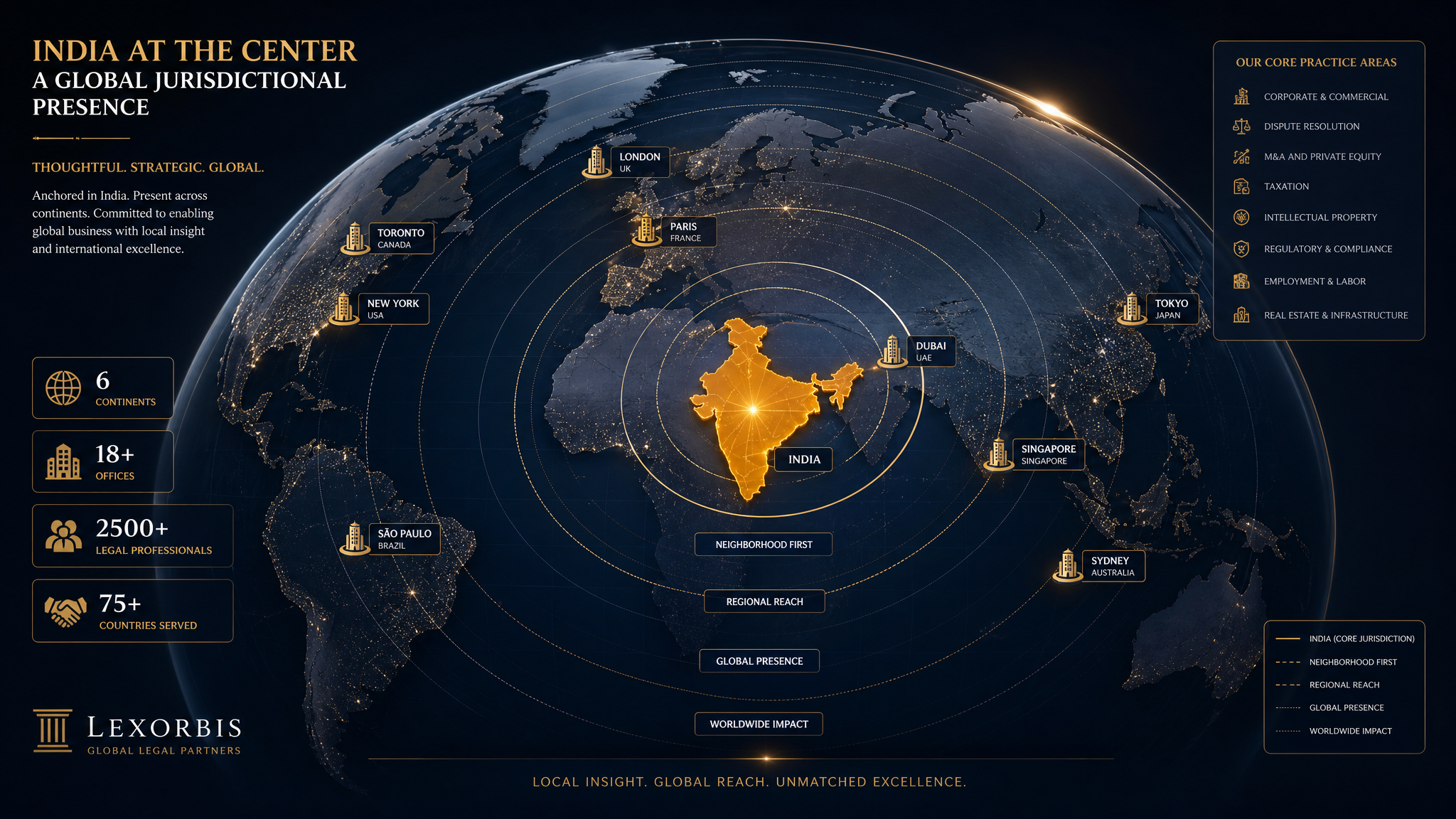
DPDPA's Long-Arm Jurisdiction: When Your Offshore Entity Becomes an Indian Data Fiduciary
Section 3(b) Extraterritorial Application and Its Implications for Global Corporate Structures
"This Act applies to the processing of digital personal data outside the territory of India, if such processing is in connection with any activity related to offering of goods or services to Data Principals within the territory of India."
— DPDPA Section 3(b)
 International
Data Privacy Due Diligence in India M&A: The DPDPA Dimension
How DPDPA Transforms Pre-Acquisition Privacy Audits, Warranty Frameworks, and Post-Close Integration
"Every person who has been a Data Fiduciary shall, after ceasing to be so, comply with the obligations under this Act in respect of the personal data processed by that person while being a Data Fiduciary."
— DPDPA Section 8(8)
Grounded in Statute
Every insight is anchored to specific provisions of the Digital Personal Data Protection Act, 2023 and the DPDP Rules 2025. Cross-references enable direct verification against authoritative legislative text.
What practitioners and boards are asking
What are the consent requirements under DPDPA?
Section 6 requires free, specific, informed, unconditional, and unambiguous consent with clear affirmative action. Section 5 mandates itemised notice before or at the time of data collection. Section 7 provides certain legitimate uses (historically termed deemed consent) including employment, public interest, and medical emergencies. Consent must be as easy to withdraw as to give under Section 6(4).
What is the breach notification requirement under DPDPA?
Section 8(6) requires every Data Fiduciary to inform both the Data Protection Board and each affected Data Principal of a personal data breach. Rule 7 of DPDP Rules 2025 prescribes the form and manner of notification. Rule 7 requires intimation to the Board and affected Data Principals without delay, and a detailed report to the Board within 72 hours of becoming aware of the breach (or any longer period the Board allows).
Which provisions of the DPDPA and the DPDP Rules, 2025 are relevant to Insights?
Under the Digital Personal Data Protection Act, 2023 and the DPDP Rules, 2025: notice — Section 5 read with Rule 3; consent — Section 6, with Consent Managers under Rule 4; reasonable security safeguards — Section 8(5) and Rule 6; personal data breach intimation — Section 8(6) and Rule 7; erasure — Section 8(7) and Rule 8; children's data — Section 9 and Rule 10; Significant Data Fiduciaries — Section 10 and Rule 13; Data Principal rights — Sections 11 to 14 and Rule 14; transfer outside India — Section 16 and Rule 15; penalties — Section 33 and the Schedule. Published by AMLEGALS (Anandaday Misshra, Founder & Managing Partner).
Who advises businesses on Insights under India's DPDPA?
AMLEGALS, an Indian law firm, advises Data Fiduciaries, Data Processors and foreign companies on Insights under the Digital Personal Data Protection Act, 2023 and the DPDP Rules, 2025. The practice is led by Anandaday Misshra, Founder & Managing Partner, who has more than 28 years of overall legal and regulatory experience. Enquiries: https://amlegalsdpdpa.com/contact or [email protected] or [email protected].
What should I send AMLEGALS to get a scoped proposal on Insights?
Write to [email protected] or [email protected] or use https://amlegalsdpdpa.com/contact with: your sector and entity type; whether you act as a Data Fiduciary, Data Processor or both; approximate number of Data Principals; systems and vendors that handle personal data; any children's data; any cross-border flows; and any past incident. With these facts a partner can propose a scope for Insights rather than a generic checklist.
How do I get a first view of my DPDPA exposure on Insights?
Use the DPDPA Exposure Assessment at https://amlegalsdpdpa.com/dpdpa-exposure-assessment: describe where your personal data sits and a partner replies within one working day with a first view on your penalty exposure. Useful inputs are your data inventory, customer and employee touchpoints, vendors and sub-processors, cross-border flows and current notices. The principal obligations commence on 13 May 2027. Content is general legal information and not legal advice.