
AMLEGALSDPDPAVibe Data Privacy
Consent Management

DPDPA Consent Architecture Flowchart

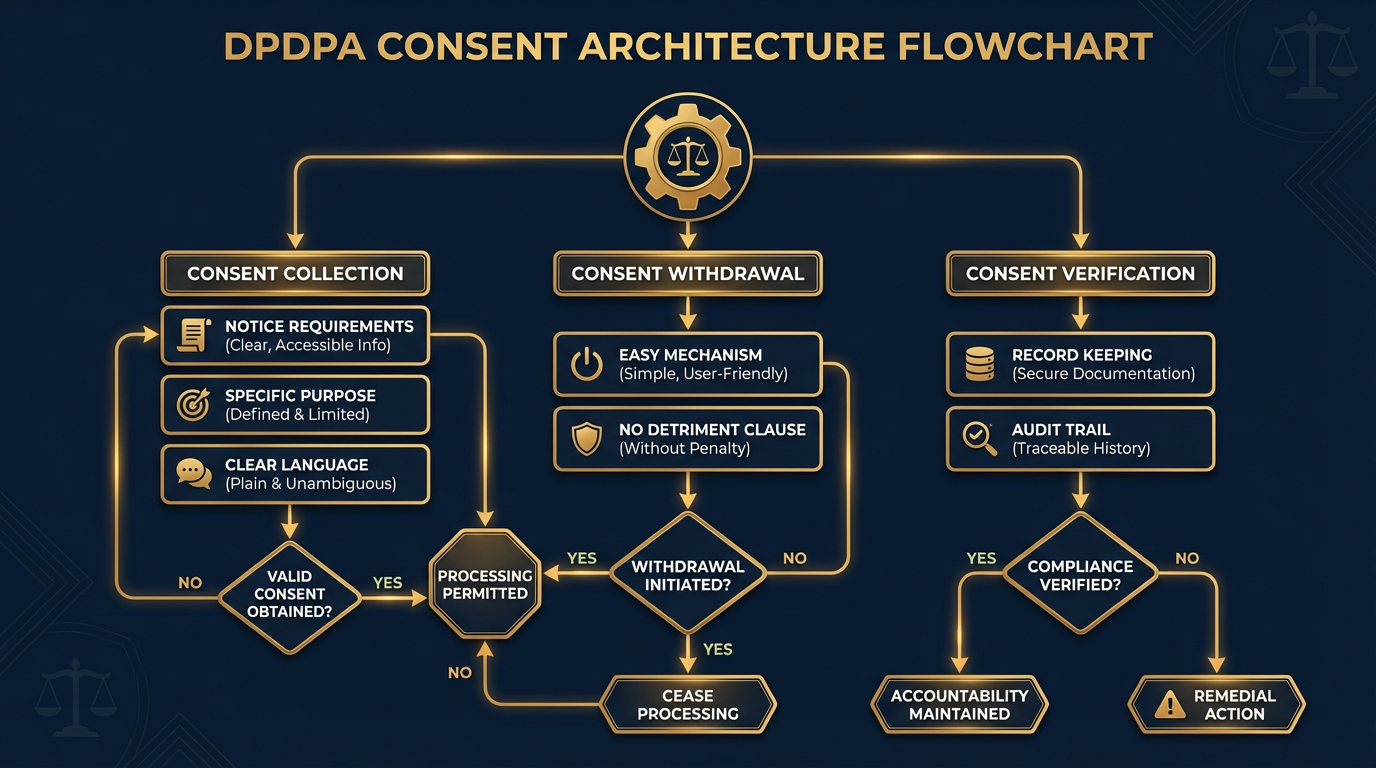
Visual guide to consent collection, withdrawal, and verification under DPDPA Section 6

24 January 2026
4 min read
Visual Guide
DPDPA Consent Architecture Flowchart

Executive Summary

The consent architecture under DPDPA establishes a framework for collection, withdrawal, and verification that reshapes how organisations engage with Data Principals.

DPDPA Consent Architecture Flowchart

DPDPA Consent Architecture Flowchart — AMLEGALS DPDPA Visual Guide Series

1

The Consent Imperative

Section 6 of the Digital Personal Data Protection Act, 2023 places consent at the heart of lawful data processing in India. The law requires consent to be free, specific, informed, unconditional, and unambiguous. This means organisations must obtain clear affirmative action from users before processing their data.

The legislation specifically bans pre ticked boxes and bundled consent mechanisms. Any consent obtained through deception or coercion is invalid. Data Fiduciaries need to present consent requests in clear, plain language that explains exactly why personal data will be processed.

This marks a significant shift from the old "deemed consent" approaches that were common in Indian data practices. Organisations now need to completely redesign how they interact with users and collect their consent.

2

Withdrawal Parity and Verification Infrastructure

Section 6(4) introduces the principle of withdrawal parity. Simply put, Data Principals must be able to withdraw their consent as easily as they gave it. Organisations cannot add friction, waiting periods, or extra verification steps when someone wants to withdraw consent.

The DPDP Rules 2025 add verification requirements on top of this. Data Fiduciaries must maintain complete audit trails of all consent transactions. These records need to capture when consent was given, for what purpose, and how it was provided.

This creates an evidence base that becomes crucial during regulatory reviews. The verification systems must also work with Consent Managers, which brings in interoperability requirements and standardised consent formats across platforms.

Key Takeaways

  • 1Consent must be free, specific, informed, unconditional, and unambiguous
  • 2Pre ticked boxes and bundled consent are explicitly prohibited
  • 3Withdrawal must be as easy as consent provision (withdrawal parity)
  • 4Comprehensive audit trails required for all consent transactions
  • 5Consent Managers introduce interoperability requirements