
AMLEGALSDPDPAVibe Data Privacy
International Transfers

Cross Border Data Transfer Framework

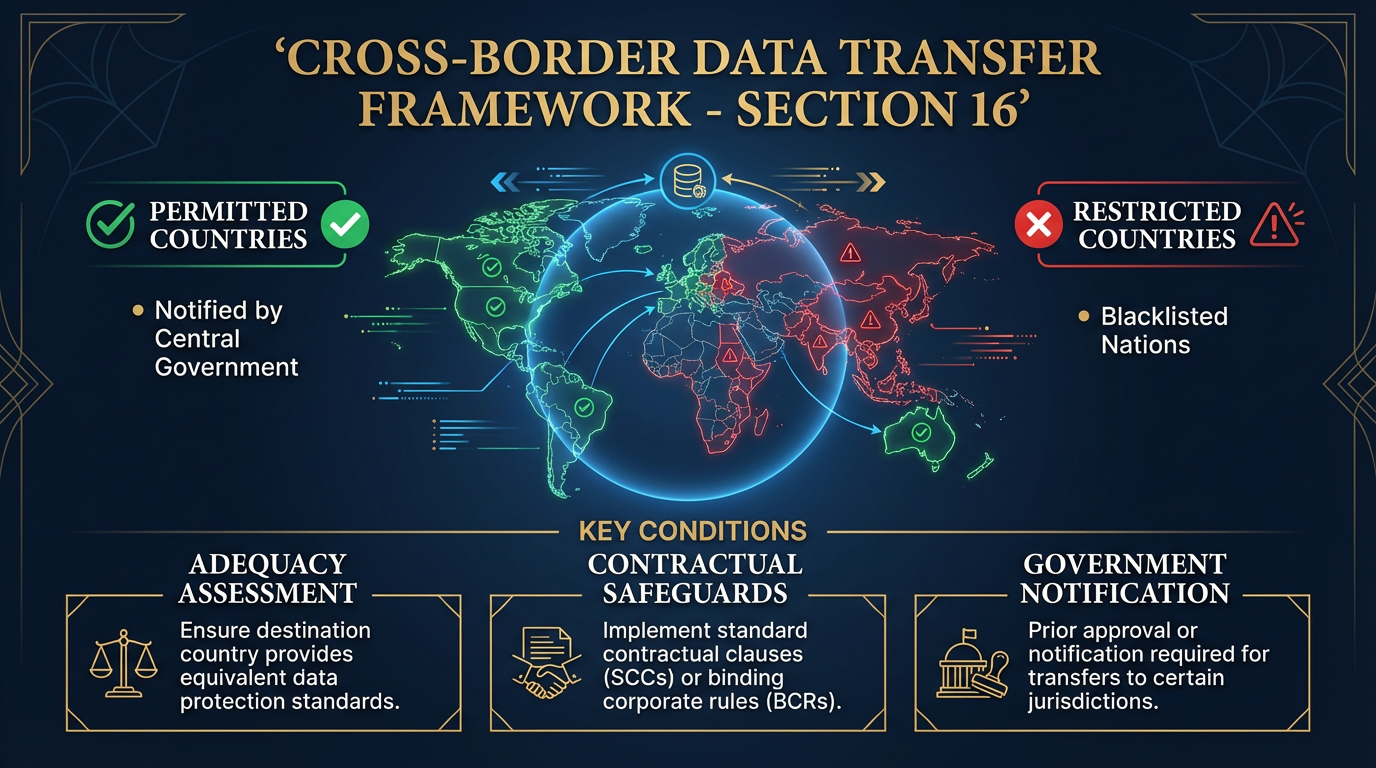
Section 16 permitted and restricted jurisdiction mapping

24 January 2026
5 min read
Visual Guide
Cross Border Data Transfer Framework

Executive Summary

DPDPA's negative list approach to cross border transfers permits transfers to all jurisdictions except those specifically restricted by Central Government notification.

Cross Border Data Transfer Framework

Cross Border Data Transfer Framework — AMLEGALS DPDPA Visual Guide Series

1

The Negative List Paradigm

Section 16 of DPDPA takes a negative list approach to cross border data transfers. This is quite different from European adequacy based frameworks. Under this approach, personal data may be transferred to any country outside India except those specifically notified by the Central Government as restricted destinations.

This framework gives multinational companies operational flexibility. You do not need adequacy determinations or standard contractual clauses for permitted jurisdictions. However, since restricted territory lists have not been published yet, planning becomes uncertain.

Organisations need to design transfer architectures that can be quickly reconfigured if notifications change the permitted destinations. Building in this flexibility from the start will save significant rework later.

2

Sectoral Overlay and Compliance Complexity

The DPDPA framework operates alongside sector specific data localisation requirements. This creates a more complex compliance landscape than the statute alone might suggest.

Reserve Bank of India directions require payment system data to be stored exclusively in India. IRDAI guidelines impose similar requirements for insurance sector data. SEBI's evolving position adds another layer for securities market data.

These sectoral requirements work as overlays, not exceptions to DPDPA. Organisations must satisfy both the general DPDPA framework and any applicable sectoral restrictions. For entities operating across regulated sectors, this means detailed data classification and flow mapping. You need to ensure sectoral localisation requirements are honoured even when non regulated data categories take advantage of Section 16's permissive transfer regime.

Key Takeaways

  • 1Negative list approach permits transfers to non restricted jurisdictions
  • 2No adequacy determinations or SCCs required for permitted destinations
  • 3Central Government may notify restricted territories
  • 4RBI, IRDAI, SEBI localisation requirements create sectoral overlays
  • 5Granular data classification essential for multi sector compliance