
AMLEGALSDPDPAVibe Data Privacy
Rights Management

Data Principal Rights Overview

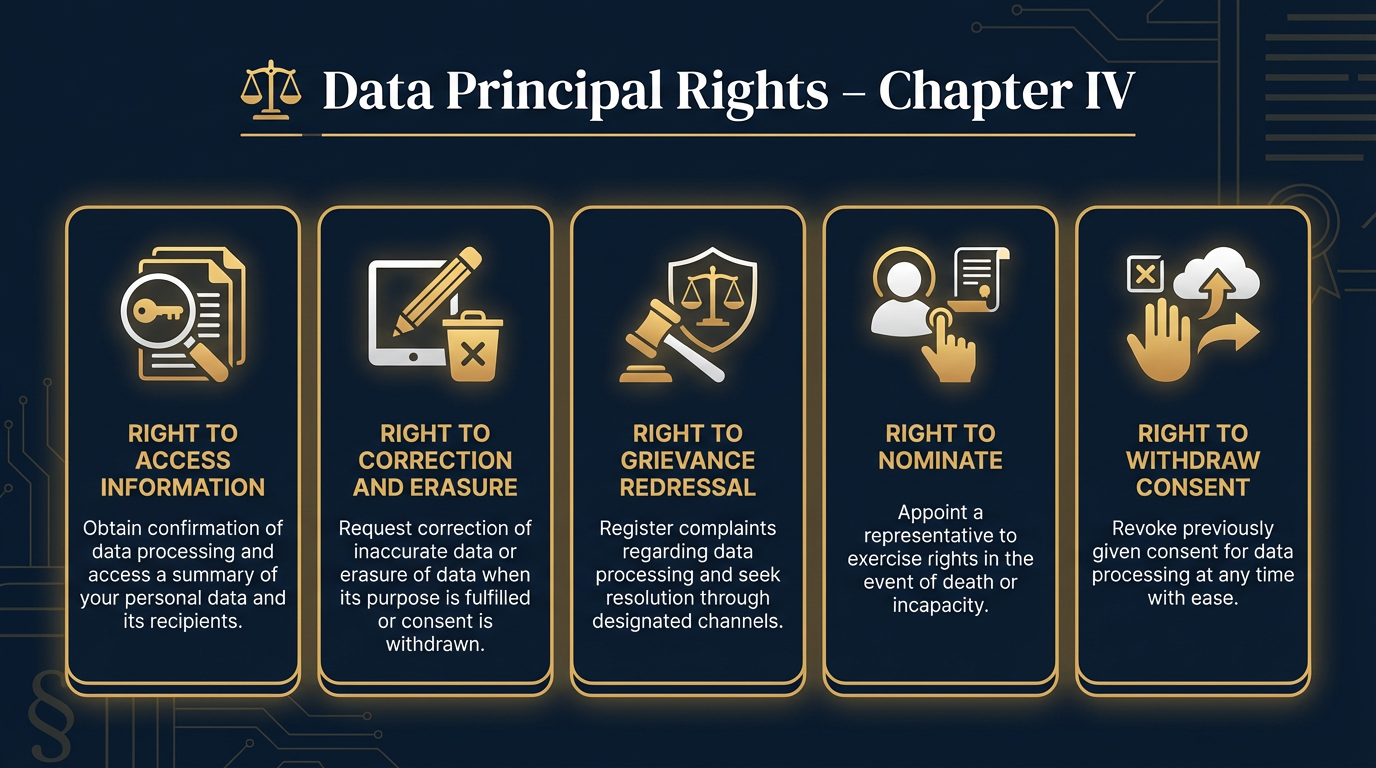
Chapter IV rights framework visualised with operational implications

24 January 2026
4 min read
Visual Guide
Data Principal Rights Overview

Executive Summary

Chapter IV of DPDPA establishes a rights framework enabling Data Principals to exercise meaningful control over their personal data through access, correction, erasure, grievance redressal, and nomination mechanisms.

Data Principal Rights Overview

Data Principal Rights Overview — AMLEGALS DPDPA Visual Guide Series

1

The Rights Architecture

DPDPA's rights framework is more streamlined than GDPR's comprehensive catalogue, but it establishes essential mechanisms for empowering Data Principals.

Section 11 gives the right to access information about processing. Data Principals can request a summary of personal data processed, processing purposes, and categories of third parties their data has been shared with.

Section 12 establishes correction and erasure rights. People can fix inaccurate data and request deletion when the processing purpose has been fulfilled. Unlike GDPR's "right to be forgotten," DPDPA's erasure right is tied to purpose fulfilment rather than broader objection grounds. Section 13 mandates grievance redressal mechanisms within Data Fiduciary organisations, creating internal accountability before matters escalate to the regulator.

2

Nomination Rights and Posthumous Data Governance

Section 14 introduces something distinctive in data protection law: the right to nominate another individual to exercise Data Principal rights in case of death or incapacity.

This provision addresses the increasingly important question of digital asset succession and what happens to data after someone passes away. The nominated individual can exercise the Data Principal's rights, though how this interacts with estate laws and family dynamics needs careful consideration.

For organisations, this creates verification obligations. You need to ensure rights requests from nominees are legitimate while avoiding delays that frustrate the provision's protective purpose. The DPDP Rules set out procedures for registering nominations and verifying nominees, adding operational complexity to rights fulfilment processes.

Key Takeaways

  • 1Right to access information about processing (Section 11)
  • 2Right to correction and erasure (Section 12)
  • 3Right to grievance redressal (Section 13)
  • 4Right to nominate for death or incapacity (Section 14)
  • 5Erasure tied to purpose fulfilment, not general objection