
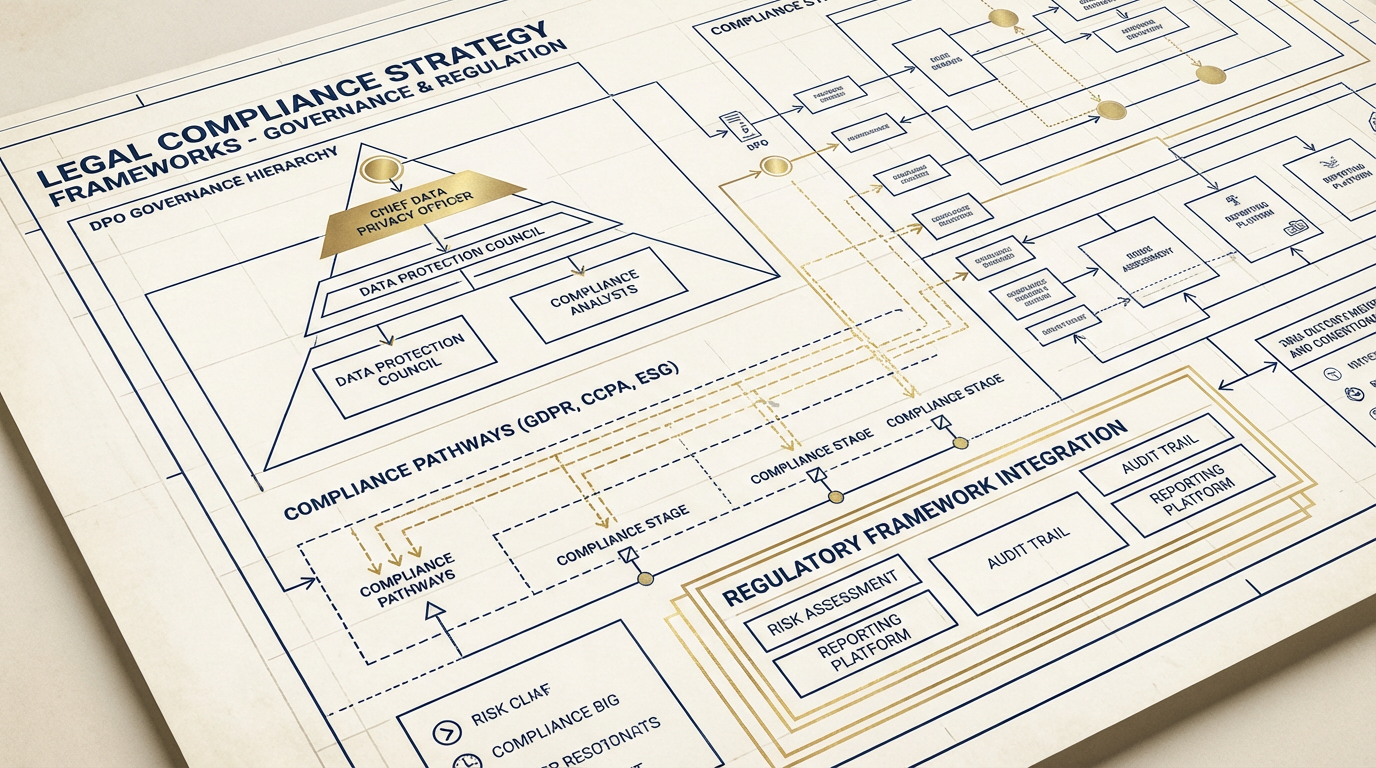
Most DPO appointments begin with enthusiasm and end with frustration. The role demands strategic thinking but organisational structures rarely support it. This blueprint provides the framework that transforms the DPO function from reactive compliance firefighting to strategic risk management.
1Understand Your Actual Mandate
Section 10 creates specific DPO obligations. Point of contact for data principals. Representative before the Data Protection Board. Oversight of compliance activities. These statutory duties are your floor not your ceiling.
The strategic DPO expands beyond statutory minimums to create organisational value. You advise on data strategy implications. You identify privacy as competitive advantage. You translate regulatory requirements into business language. But this expansion requires understanding your actual mandate first. Without statutory foundation strategic ambitions become overreach.
Key Points
- Statutory duties are the floor not ceiling
- Expansion requires understanding foundation
- Value creation demands business translation
2Map Your Compliance Surface
Strategy begins with understanding your territory. What personal data does the organisation process? Through which systems and processes? With which vendors and processors? For which purposes and under which legal bases?
This mapping exercise reveals your actual compliance surface. Most organisations discover their data processing extends far beyond documented systems. Shadow IT, legacy applications and informal data sharing create exposure that policy documents do not address. Your strategy must encompass actual operations not documented intentions.
Key Points
- Personal data processing inventory
- System and vendor mapping
- Gap between documentation and reality
3Establish Governance Architecture
The DPO cannot achieve compliance alone. You need governance structures that distribute responsibility while maintaining accountability. Privacy champions in business units provide operational awareness. Steering committees provide executive sponsorship. Incident response teams provide crisis capability.
This architecture must be documented and operational. Documented means written roles, responsibilities and escalation procedures. Operational means people actually perform their assigned functions. Many organisations have documented governance that no one follows. Your strategy must ensure governance operates as designed.
Key Points
- Privacy champions for operational awareness
- Steering committees for executive sponsorship
- Documentation must match operation
4Prioritise By Risk Not Alphabetically
Compliance perfection is impossible. Resources are finite. Time is limited. Your strategy must prioritise by risk. What processing creates highest likelihood of breach? What data categories carry highest sensitivity? What failures create highest regulatory and reputational exposure?
Risk based prioritisation ensures limited resources address greatest exposures first. The strategic DPO does not attempt simultaneous remediation of all gaps. They sequence remediation by risk, creating defensible compliance improvement even when perfect compliance remains distant.
Key Points
- Resources and time are finite
- Prioritise by risk not sequence
- Defensible improvement trajectory
5Measure and Demonstrate Progress
Strategy without metrics is opinion. You need quantifiable indicators demonstrating compliance progress. Consent rates, breach response times, training completion, vendor compliance scores. These metrics prove your function delivers value.
Equally important is communicating these metrics to stakeholders. The board needs compliance assurance. Business units need operational guidance. Employees need awareness of their responsibilities. Your strategy must include communication plans ensuring each audience receives appropriate information at appropriate frequency.
Key Takeaways
- 1Understand statutory mandate before expanding strategic scope
- 2Map actual compliance surface not documented intentions
- 3Establish governance that operates as documented
- 4Prioritise remediation by risk not sequence
- 5Measure progress with quantifiable metrics