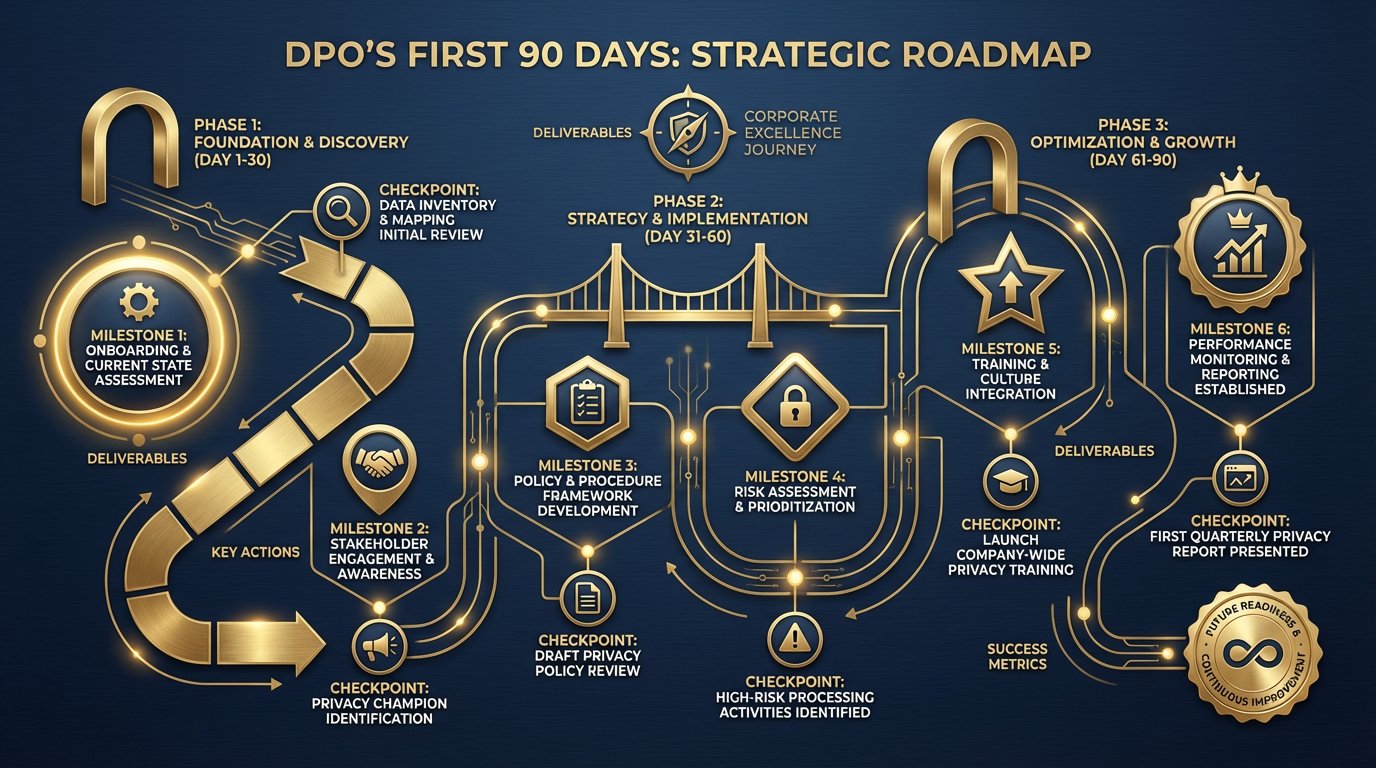
New DPO appointments fail most often in the first 90 days. The DPO either establishes credibility and operational foundation or becomes marginalised. This structured approach ensures the foundation supports lasting success.
1Days 1 to 30: Understanding
The first month is for learning not doing. Resist pressure to deliver immediate compliance improvements. You cannot improve what you do not understand.
Map the data processing landscape. What personal data flows through the organisation? Which systems store personal data? Which vendors process data on your behalf? Which legal bases support current processing? These questions require investigation not assumption.
Meet stakeholders across the organisation. Technology leaders explain system architectures. Business leaders explain operational pressures. Legal teams explain contractual frameworks. HR explains employee data handling. Marketing explains customer data usage. Each conversation reveals compliance realities that documentation obscures.
Key Points
- Map data processing landscape
- Meet stakeholders across organisation
- Learn before attempting improvement
2Days 31 to 60: Assessment
The second month translates understanding into assessment. Where does current practice diverge from DPDPA requirements? Which gaps create highest risk exposure? Which remediation activities require immediate attention versus phased implementation?
This assessment must be documented and prioritised. Create a compliance gap register cataloguing each identified gap, its risk level, remediation approach and resource requirements. This register becomes your operational roadmap and regulatory evidence of systematic compliance effort.
Present assessment findings to leadership. They need to understand the compliance landscape before you request resources. They need to understand risk exposure before you prioritise remediation. This presentation establishes your credibility as someone who understands the organisation before attempting to change it.
Key Points
- Document gaps with risk assessment
- Create prioritised compliance register
- Present findings to leadership
3Days 61 to 90: Foundation
The third month establishes operational foundation. You cannot address all identified gaps. Focus on foundation elements that enable systematic compliance improvement.
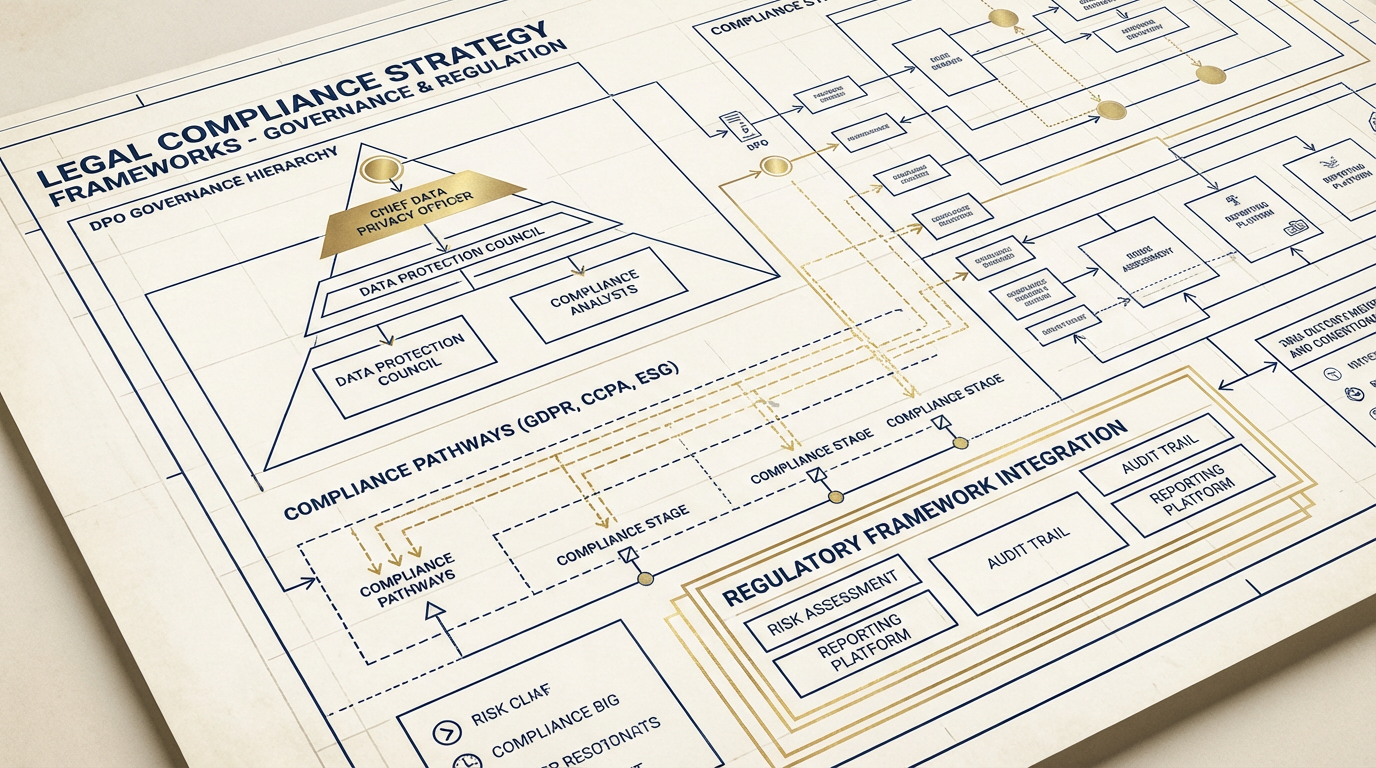
Establish governance structures. Create the privacy steering committee or designate existing committee with data protection oversight. Identify privacy champions in key business units. Define escalation procedures and reporting frequencies.
Establish core processes. Data principal rights handling requires documented workflow before requests arrive. Breach response requires defined procedures before incidents occur. Vendor assessment requires criteria before new vendor engagements.
Establish metrics and reporting. Define the indicators you will track. Create the reporting templates you will use. Set the baseline measurements against which progress will be assessed.
Key Points
- Establish governance structures
- Create core operational processes
- Define metrics and reporting
4Beyond 90 Days
The first 90 days create foundation. They do not achieve compliance. Use the established foundation to execute your prioritised remediation roadmap. Each quarter should deliver measurable compliance improvement against your baseline.
Expect setbacks. Priorities shift. Resources get redirected. Incidents consume attention. The foundation you established in the first 90 days provides resilience against these disruptions. Governance structures maintain momentum when you are distracted. Processes handle routine matters without your attention. Metrics demonstrate progress despite challenges.
Key Takeaways
- 1First month is for learning and mapping not immediate action
- 2Second month translates understanding into documented assessment
- 3Third month establishes governance, processes and metrics
- 4Foundation enables systematic improvement beyond 90 days
- 5Expect setbacks but foundation provides resilience