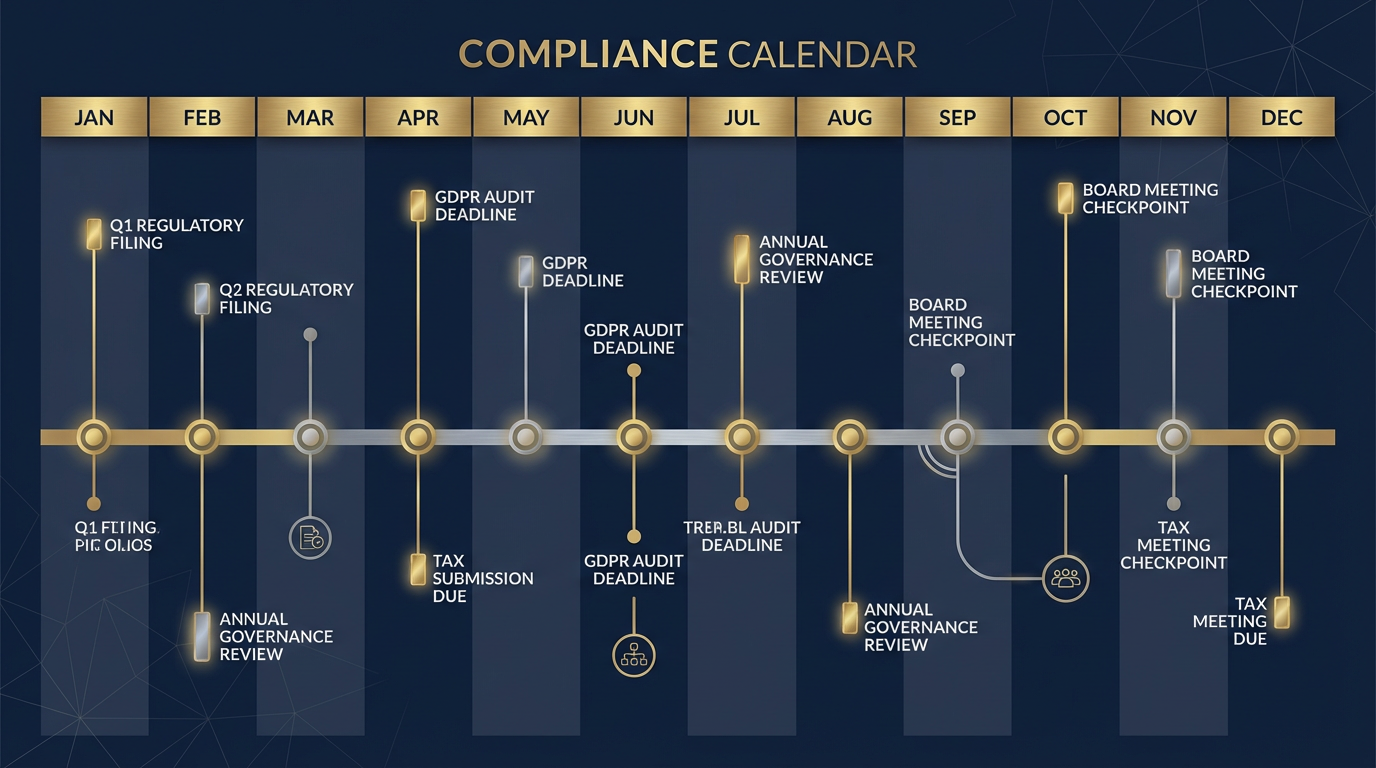
DPDPA creates multiple compliance obligations with defined timelines. Some are event triggered like breach notification. Others are periodic like annual audits. The effective DPO maintains a compliance calendar ensuring no deadline is missed.
1Recurring Annual Obligations
Significant Data Fiduciaries face annual audit requirements under Section 10(2). This audit must assess compliance with DPDPA provisions. The audit must be conducted by an independent auditor. Results must be reported to the Data Protection Board.
Planning backwards means starting audit preparation at least three months before deadline. Auditor selection and contracting requires time. Documentation compilation requires time. Remediation of identified issues before final report requires time. The DPO who begins audit preparation at the deadline has already failed.
Training refresher requirements create similar calendar obligations. Annual privacy training ensures organisational knowledge remains current. The calendar should trigger training campaigns with sufficient lead time for completion before anniversary dates.
Key Points
- Annual SDF audits require advance planning
- Three month lead time for audit preparation
- Training refreshers need campaign lead time
2Event Triggered Deadlines
Breach notification timelines are unforgiving. Section 8(6) requires notification to the Data Protection Board and affected data principals. CERT In directions require 6 hour notification for cyber incidents. These timelines begin when you discover the breach not when you complete investigation.
The compliance calendar cannot schedule breach dates. But it can schedule breach readiness activities. Quarterly breach simulation exercises ensure response procedures remain operational. Monthly contact verification ensures notification channels remain valid. Regular template review ensures communications meet current requirements.
Key Points
- Breach timelines begin at discovery
- Schedule readiness activities not breach dates
- Quarterly simulations and monthly verifications
3Regulatory Filing Deadlines
The Data Protection Board may establish periodic reporting requirements. The DPDP Rules, 2025 prescribe compliance reports from Significant Data Fiduciaries. Consent Managers face registration and renewal obligations.
These filing deadlines require calendar management. Missing a regulatory filing creates immediate non compliance regardless of operational compliance status. The calendar should trigger filing preparation with sufficient lead time for data compilation, review and submission.
Key Points
- Regulatory filings create hard deadlines
- Missing filings equals non compliance
- Lead time for data compilation and review
4Contract and Vendor Deadlines
Data processing agreements expire. Vendor certifications lapse. Service level agreement renewals arise. Each creates compliance relevant deadline.
The compliance calendar should track contract expiry dates with renewal trigger points. A vendor whose agreement expires processes data without compliant contractual basis. A processor whose certification lapses operates without required assurance. The DPO who relies on procurement calendars discovers these gaps too late.
Build 90 day triggers for contract renewals. This provides time for renegotiation if terms require updating. It provides time for vendor transition if relationship should not continue. It prevents compliance gaps from contract expiry.
Key Points
- Track contract expiry with renewal triggers
- 90 day lead time for renewals
- Prevent gaps from vendor expiry
Key Takeaways
- 1Plan backwards from deadlines not forwards from today
- 2Annual obligations need three month preparation lead time
- 3Event triggered deadlines need scheduled readiness activities
- 4Regulatory filings create hard deadlines regardless of operations
- 5Contract deadlines need 90 day renewal triggers